
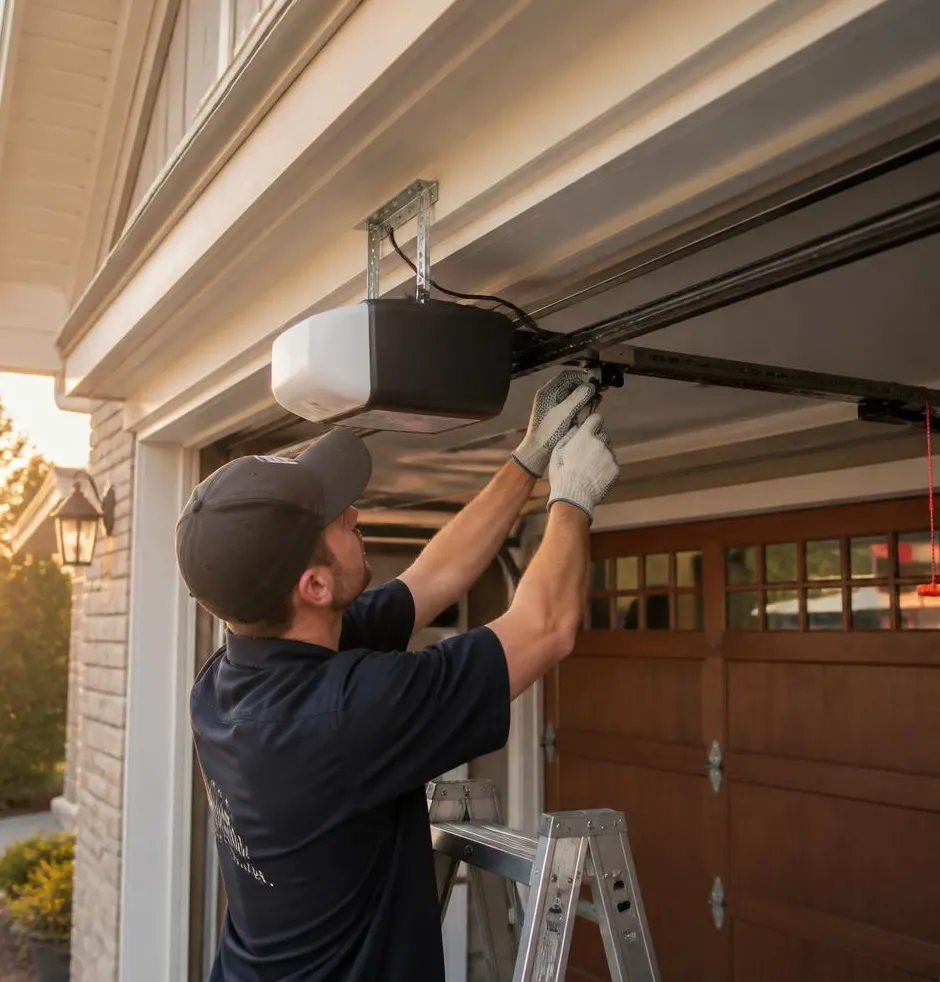
Rule of thumb: if your garage door worked fine all summer, test it again right now, because cold is what exposes problems that warm weather was hiding. The exceptions are doors that already sag, drag, or respond slowly to the opener — those need attention before the first hard freeze, not after.
Why Winter Hits Garage Doors Harder Here
Northern Colorado doesn't just get cold, it swings. A 60-degree afternoon can drop into the teens overnight, and that kind of daily temperature whiplash stresses metal, rubber, and fasteners in ways a steady cold climate doesn't. Add dry air that dries out seals faster, hail dents from summer storms that are easier to spot now that the light angle has changed, and altitude sun that bakes the weatherstripping on south-facing doors, and you've got a door that's dealing with more than it looks like.
Check the Weatherstripping First
The rubber seal along the bottom of the door and the strips along the sides are your first line of defense against cold air and blowing snow. Look for cracking, flattening, or gaps where you can see daylight. Dry mountain air makes rubber brittle faster than people expect, so a seal that looked fine two winters ago may already be failing. Replacing it is inexpensive and takes less than an hour, and it's one of the few garage door jobs a handy homeowner can do without special tools.
Switch to Cold-Weather Lubricant
Summer-grade grease thickens in cold temperatures and can actually slow down rollers, hinges, and the torsion spring instead of helping them. Use a silicone-based or lithium-based lubricant rated for low temperatures on the rollers, hinges, and track — not the garage door opener's drive mechanism, which usually has its own specified lubricant or none at all. Do this before the first hard freeze, because once everything is coated in ice and grime it's a messier job.
Pay Attention to the Springs
Steel contracts in the cold, and torsion springs that were balanced correctly in August can feel noticeably different in January. A door that suddenly feels heavier when lifted manually, or an opener that strains and makes a labored sound, is often a spring losing tension in cold weather rather than a motor problem. Springs also become more brittle with age and cold, which is why winter is when a lot of spring failures actually happen, usually with a loud bang rather than a slow warning. This is not a DIY repair — torsion springs are under enough force to cause serious injury, and it's one of the main reasons local companies exist.
Test the Balance
With the opener disconnected, lift the door manually about halfway and let go. It should stay roughly in place. If it drifts down or shoots up, the spring tension is off, and that imbalance will only get worse as temperatures drop further. An unbalanced door also makes the opener work harder, which shortens its lifespan.
Don't Ignore the Opener and Sensors
Battery backups lose capacity in the cold, so if your opener has one, test it now rather than finding out it's dead during a power outage in a snowstorm. The photo-eye safety sensors near the bottom of the track can also get knocked out of alignment or fogged up from condensation when warm garage air meets cold outside air. If the door reverses for no obvious reason, wipe the sensor lenses and check that both are pointing at each other dead level.
Tighten What the Swings Have Loosened
Repeated expansion and contraction from big day-night temperature swings works bolts and brackets loose over time. Walk the track, hinges, and roller brackets with a wrench and snug anything that's moved. Loose hardware is a common cause of a door that suddenly sounds rattly or grinds going up and down, and it's a five-minute fix if caught early.
Look Over the Door Itself
Give the panels a close look in good daylight for dents left over from summer hail. Small dents are mostly cosmetic, but larger ones can throw off the door's alignment in the track or create a spot where cold air leaks through. If your door is uninsulated or has aging insulation, this is also a good time to decide whether an upgrade makes sense before the coldest months, since it affects both comfort in the garage and the heating load on an attached house.
A Quick Checklist
- Inspect and replace worn bottom and side weatherstripping
- Switch to a cold-rated lubricant for rollers, hinges, and track
- Manually test door balance with the opener disconnected
- Test the battery backup on the opener
- Clean and realign photo-eye sensors
- Tighten loose bolts and brackets along the track and hinges
- Check panels for hail dents or new gaps
When to Call Loveland Garage Door
If your door feels unbalanced, the spring looks stretched or shows a visible gap, or the opener is straining and making noises it didn't make a month ago, it's time to call in a professional rather than keep adjusting things yourself. Our Garage Door Maintenance service covers a full inspection of springs, cables, rollers, and hardware before winter settles in, and if a spring is already showing signs of fatigue, our Spring Replacement service gets it swapped out safely before it fails on a cold morning when you need to get to work. We show up on time, explain exactly what we find in plain English, and get it fixed right the first time.
If you're anywhere in Loveland, Fort Collins, Berthoud, Johnstown, Windsor, Longmont, Greeley, or Milliken and want your garage door checked out before the cold really sets in, give Loveland Garage Door a call today.