
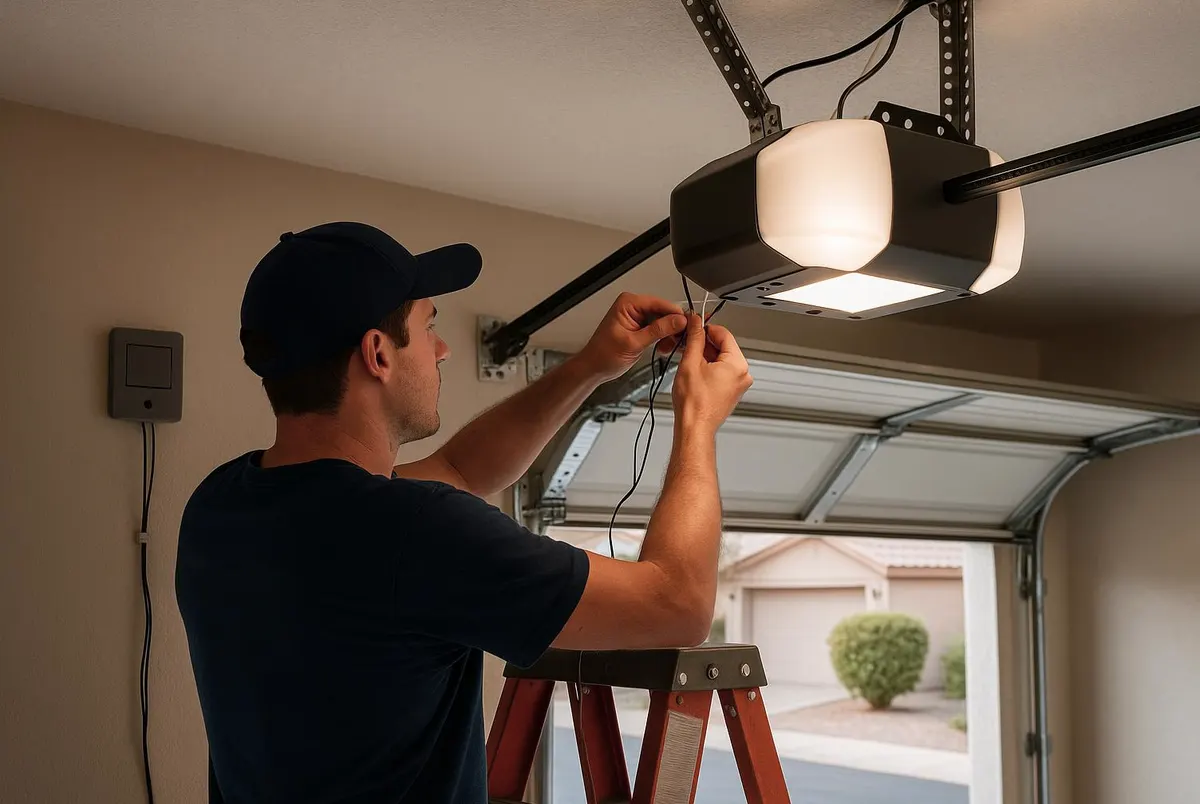
Power's Out: How to Open and Close Your Garage Door by Hand
Rule of thumb: if your garage door opens and closes smoothly by hand with one steady pull, it's safe to operate manually during an outage. The exceptions matter, though. If the door feels heavy, jerky, lopsided, or won't stay in place when you let go halfway, that's a spring or cable problem, not a power problem, and manual operation can be dangerous. Don't force it. With early winter storms starting to roll through northern Colorado this time of year, it's worth knowing the difference before you're standing in your garage with a flashlight at 6 a.m.
Tools You'll Need
- A flashlight or headlamp (your garage light won't work either)
- Work gloves, especially once temperatures drop below freezing overnight
- A step stool if your release cord hangs high
- A rag and some silicone-based lubricant, handy if the track feels stiff from the cold
Step 1: Opening the Door Manually
- Locate the emergency release cord, usually a red rope hanging from a lever on the trolley that rides along the opener's rail.
- Before pulling it, make sure the door is fully down and nothing is holding it up unevenly. Releasing the trolley while the door is halfway open can let it drop suddenly.
- Pull the cord straight down, then toward the back of the opener (toward the motor) to disengage the trolley from the door carriage.
- Lift the door slowly with both hands, keeping steady pressure. A properly balanced door should rise with moderate effort and stay roughly where you stop it.
- If it feels heavy, fights you, or starts to slide back down on its own, stop and prop it open or lower it back down. That's a sign of spring fatigue, which is common once the big day-night temperature swings we get here start stressing metal components.
Step 2: Closing and Securing the Door
- Lower the door by hand using slow, even pressure, keeping your hands clear of the track and rollers.
- Once closed, engage the interior slide bolt or manual lock if your door has one. This matters more than people think; a disengaged opener means the door isn't locked the way it normally is.
- If wind is part of the outage (common with the gusty fronts that knock out power here), check that the door sits flush and isn't rattling loose at the bottom corners.
Step 3: Reconnecting the Opener Once Power Returns
- With the door fully closed, pull the emergency release cord toward the motor unit (the opposite direction from before) until you hear or feel the trolley click back into the carriage.
- Test the door with your remote or wall switch. Listen for a clean engagement sound as it starts moving, not a grinding or slipping noise.
- Run it through a full open-and-close cycle and watch that it travels the entire track smoothly, without hesitating or reversing unexpectedly.
- If the opener runs but the door doesn't move, or it moves only a few inches, the trolley likely didn't fully reconnect. Try the release cord again before assuming something's broken.
What a Homeowner Can Handle vs. What Needs a Technician
Pulling the release cord, lifting the door by hand, and reconnecting the trolley are all normal homeowner tasks. Where it crosses into technician territory:
- The door feels unbalanced, heavy, or drops on its own, which usually points to worn or broken springs
- You notice frayed, kinked, or loose cables near the bottom brackets
- The track looks bent or the rollers are visibly off the rail
- The opener reconnects but makes grinding noises, runs the motor without moving the door, or trips the breaker repeatedly
None of these are power issues, and forcing a manual lift on a bad spring is a common way people get hurt or bend a track permanently.
When to Call Loveland Garage Door
If you went through this process and the door felt wrong at any point, that's worth a call before the next outage catches you off guard. We handle Spring Replacement for doors that feel heavy or won't hold position, and Cable & Track Repair for anything frayed or misaligned near the bottom brackets. If the opener reconnected but isn't behaving normally, afterward, our Opener Repair & Installation techs can diagnose whether it's a logic board issue or a travel-limit setting that got knocked out during the outage. Heading into a winter with more cold snaps and outages likely, a quick maintenance check now can catch a weak spring before it fails on its own.
If your garage door didn't open the way it should have, or you just want it checked before the next storm rolls through, give Loveland Garage Door a call. We serve Loveland, Fort Collins, Berthoud, Johnstown, Windsor, Longmont, Greeley, and Milliken, and we'll explain exactly what we find in plain English.